Named Reactions › Part D: Aldehydes & Ketones — Reduction / Oxidation
Stephen Reaction (Stephen reduction)
JEE MainWhat is the Stephen Reaction (Stephen reduction)?
Nitriles are reduced by stannous chloride and hydrochloric acid (dry ether) to the imine hydrochloride (aldimine stannichloride), which on hydrolysis gives the corresponding aldehyde.
Reagents and conditions
- SnCl₂ + HCl (dry ether)
- then H₃O⁺ (hydrolysis)
- R–C≡N → R–CHO
Example

Mechanism of the Stephen Reaction (Stephen reduction)
HCl protonates the nitrile; SnCl2 supplies two electrons (Sn2+ → Sn4+) and the C≡N is reduced to C=N: an iminium salt forms.

Hydrolysis: water attacks the iminium carbon; π electrons move to N.
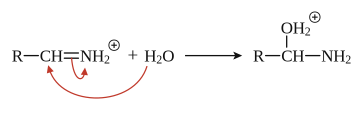
Proton transfers make NH3 a good leaving group; it leaves and the aldehyde forms.

Shortcut to write the product
- –C≡N → –CHO (same carbon count). The N leaves as NH4Cl.
- LiAlH4 on R–CN gives the amine R–CH2NH2, not the aldehyde; DIBAL-H also gives RCHO.
JEE practice question
Benzonitrile is treated with SnCl2 / HCl and the product is hydrolysed. The final product is:
- benzylamine
- benzaldehyde
- benzoic acid
- benzamide
Show answer
Answer (b) — Stephen reduction stops at the imine (C=N), which hydrolyses to the aldehyde C6H5CHO.
📘 Study all 57 named reactions with mechanisms in the free 60 Minutes to JEE Named Reactions Handbook.